
India’s Online Gaming Bill of August 2025: Why Real-Money Fantasy, Poker and Rummy Were Prohibited — and What That Still Means for Bonus Codes
On 20 and 21 August 2025, Parliament cleared the Promotion and Regulation of Online Gaming Bill, 2025 — a MeitY measure that prohibited online money games, including real-money fantasy sports, poker and rummy, while carving out space to promote e-sports and online social games. Nearly a year on, the Bill remains the cleanest legal frame for reading welcome bonuses, deposit matches, advertising and payment rails that still touch real-money fantasy products in India.
· My11Circle News Desk · Reference · Original events 20–21 August 2025
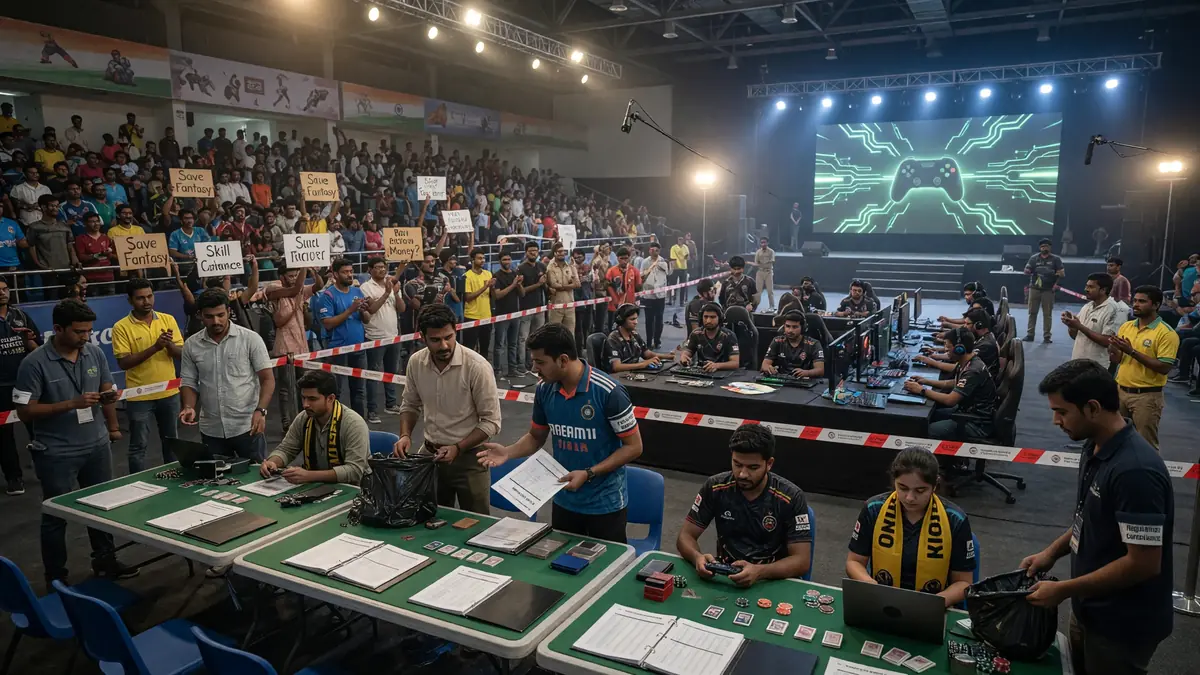
The public explainer that still anchors most plain-language summaries of the Bill is a DD India YouTube segment published on 21 August 2025 under #TheEconomicBrief, presented by Annu Kaushik and titled around three-year jail terms, a Rs 1 crore fine and the question of which apps fell under the ban. The video description stated, without hedging, that the Bill sought to ban real-money games such as fantasy sports, poker and rummy while promoting e-sports and online social games. That description matched the legislative track recorded by PRS India under the Ministry of Electronics and Information Technology: introduced in the Lok Sabha on 20 August 2025, passed by the Lok Sabha the same day, and passed by the Rajya Sabha on 21 August 2025. The chronology is short, public and fixed. Everything that follows here sits on that record rather than on later rumour about individual apps or unconfirmed enforcement notices.
For fantasy managers who mainly meet regulation through a welcome screen or a deposit match, August 2025 is easy to file as background noise. It is not. The Bill did three things that still shape how bonus codes, offers and advertising can be described a year later. First, it defined an “online money game” in a way that reaches beyond pure chance and covers stakes paid for monetary or other enrichment, whether the underlying contest is skill, chance or both. Second, it prohibited not only offering such games but also advertising them and facilitating financial transactions for them, with the Centre empowered to block related information from public access. Third, it set criminal penalties that treat offering and transaction facilitation as cognisable and non-bailable offences. Those three pillars — definition, prohibition of the commercial stack, and penalty — are the reason a retrospective on the Bill belongs beside any serious reading of real-money fantasy promotions.
What Parliament actually passed in August 2025
PRS India’s bill track places the measure under MeitY and records a two-day parliamentary sprint rather than a long committee drama. The Bill was introduced in the Lok Sabha on 20 August 2025 and cleared the lower house on the same day. The Rajya Sabha passed it on 21 August 2025. That sequence is the verified event. DD India’s same-day explainer, released as the upper house completed its work, translated the Bill for a general audience: real-money fantasy sports, poker and rummy were named among the products the Bill sought to ban, while e-sports and online social games were named among the categories the Centre would be empowered to promote. The explainer’s framing — jail time, crore-level fines, and a list of affected product types — is why the clip still circulates as the plain-language companion to the legislative text.
Nothing in the verified record requires inventing a later presidential assent date, a notified commencement schedule or a state-by-state enforcement map that the source dossier does not supply. The factual ceiling for this piece is the Bill as introduced and passed in mid-August 2025, the definition of online money games, the trio of prohibited acts (offer, advertise, facilitate payments), the penalty bands, and the promotional mandate for e-sports and stake-free social games. Where later operational detail is missing from that record, it is left missing rather than filled with speculation.

How the Bill defined an online money game
The definition is the hinge. An online money game, on the verified record, is an online game in which a user pays money or other stakes — including credits, coins or tokens convertible to money — with the expectation of monetary or other enrichment. The definition expressly covers games of skill, games of chance, and games that mix both. That last clause is the reason fantasy sports sit inside the same legal sentence as poker and rummy in the DD India description. A product cannot step outside the definition merely by arguing that captain selection or salary-cap construction involves skill. If users stake money or convertible tokens for enrichment, the product is an online money game under the Bill’s language.
That drafting choice also explains why bonus mechanics matter. A welcome match, a reload code, a referral credit that can be converted into contest entry, or any token system that maps back to cash is not a side decoration. It is part of the stake-and-enrichment structure the definition reaches. Readers who only track the MY11CIRCLE100-style first-deposit offer as a marketing line miss the deeper point: the Bill’s definition attaches to the economic relationship between the user and the product, not to the aesthetic of the app or the sporting subject matter of the contests.
What the Bill prohibited: offer, advertising and payments
The prohibition layer is broader than a simple “do not run the game” rule. On the verified record, the Bill prohibits offering or aiding online money games, advertising them, and facilitating financial transactions for them. It also empowers the Centre to block related information from public access. That combination attacks the full commercial stack: the product itself, the marketing that recruits users into it, the payment rails that move money in and out, and the public information surface that keeps the product discoverable. A brand that only “stops accepting new deposits” while continuing to advertise or process withdrawals is still standing inside the same prohibition map if those acts fall under the statutory language.
For anyone evaluating fantasy bonus codes a year later, the advertising ban is the least abstract of the three. Deposit matches, festival reloads, referral bounties and celebrity endorsement spots are advertising when they promote a real-money product. The payment-facilitation ban is equally concrete: UPI rails, wallet top-ups, card gateways and any intermediary that knowingly moves stakes toward an online money game sit inside the prohibited zone. The information-blocking power is the enforcement backstop — a tool that can remove public access to material the Centre treats as related to prohibited services. None of those three limbs requires a separate “fantasy appendix” in the Bill; they apply because fantasy with stakes is already inside the money-game definition.
| Legislative element | Verified detail (August 2025) | Why it matters for offers |
|---|---|---|
| Parliamentary track | Introduced and passed Lok Sabha 20 Aug 2025; passed Rajya Sabha 21 Aug 2025 (MeitY; PRS India) | Fixes the original date and authority for any retrospective reading |
| Money-game definition | Stake of money/credits/coins/tokens convertible to money for enrichment; skill, chance or both | Pulls real-money fantasy into the same frame as poker and rummy |
| Prohibited acts | Offer/aid; advertise; facilitate financial transactions; Centre may block related information | Covers product, promo copy, payment rails and public listings |
| Offer penalty | Up to 3 years’ imprisonment, fine up to Rs 1 crore, or both | Sets the ceiling for running a real-money service |
| Advertising penalty | Up to 2 years’ imprisonment, fine up to Rs 50 lakh, or both | Directly frames bonus-code and endorsement marketing |
| Payment facilitation | Up to 3 years and/or fine up to Rs 1 crore; cognisable and non-bailable with offering | Targets the deposit and withdrawal machinery around offers |
| Promotional mandate | Centre may promote e-sports and online social games without stakes; may create an Online Gaming Authority | Draws a bright line between stake-free products and money games |
Penalties: years, crores and cognisable offences
The DD India explainer led with the penalty numbers for a reason. Offering online money gaming services is punishable with imprisonment up to three years, a fine up to Rs 1 crore, or both. Advertising such services is punishable with imprisonment up to two years, a fine up to Rs 50 lakh, or both. Facilitating financial transactions for such services carries up to three years’ imprisonment and/or a fine up to Rs 1 crore. Offering and transaction-facilitation offences are cognisable and non-bailable. Those are not civil licensing footnotes. They are criminal exposure bands attached to the same commercial stack that produces welcome bonuses and deposit matches.
Reading the penalty table beside the advertising ban is the shortest way to understand why bonus-code language became a compliance surface rather than a pure growth lever after August 2025. A reload code is not only a wallet mechanic; it is also a promotional message. A celebrity push for a first-deposit match is not only brand building; it is advertising of a product class the Bill named. A payment partner that keeps a real-money fantasy top-up flow open is not a neutral pipe; it is inside the facilitation limb. The verified record does not require guessing how every future prosecution will be framed. It only requires acknowledging that Parliament wrote criminal consequences into each of those limbs.

What the Bill chose to promote instead
The title of the measure — Promotion and Regulation of Online Gaming — is not ornamental. Alongside the prohibition of online money games, the Bill empowers the central government to promote e-sports and online social games described around recreation, entertainment or skill development without stakes. It also contemplates an Online Gaming Authority that may classify and register games. That dual structure is the legislative mirror image of the ban: money games with stakes are pushed out; stake-free competitive and social formats are pulled in under a promotional and classificatory umbrella.
For fantasy readers, the practical distinction is blunt. A product that keeps a cash wallet, a deposit match and a withdrawable prize pool is on the money-game side of the line drawn in August 2025. A product that offers pure simulation, practice contests without stakes, or e-sports competition without convertible tokens is on the promotional side — subject to whatever classification and registration machinery the Centre builds through the contemplated authority. The verified record does not invent the detailed rulebook of that authority. It only establishes that Parliament intended a classification path for the stake-free categories it wanted to keep.
Why this still frames bonus codes and offers
Bonus codes are where most users first touch the commercial stack the Bill regulated. A first-deposit match, a Friday reload, a referral credit and a festival double-deposit are all messages that recruit staking behaviour. After August 2025, those messages cannot be read as free-floating marketing copy. They sit next to a statute that prohibited advertising online money games, prohibited facilitating the payments that make offers usable, and attached multi-year jail exposure and crore-level fines to the offer and payment limbs. The running inventory of active My11Circle welcome matches, reload terms, referral rewards, KYC checks and state-wise eligibility is maintained on the main My11Circle bonus codes and offers listing; the Bill is the legal ceiling against which any such listing has to be understood.
That is also why a reference piece on a year-old Bill still belongs in a bonus-code reading list. The welcome amount on a screen can change weekly. The statutory definition of an online money game does not. The festival calendar can rotate. The advertising and payment prohibitions do not. Readers who only compare rupee figures across apps without reading the August 2025 frame are comparing cosmetics. Readers who start from the definition, the three prohibited acts and the penalty bands are comparing products inside the legal structure Parliament actually wrote.
How to read claims about “which apps are banned”
The DD India title asked which apps were banned. The verified answer is structural rather than a permanent brand list. Products that meet the online money-game definition — stake in, enrichment out, online delivery, skill or chance or both — fall inside the prohibition. Real-money fantasy, poker and rummy were named in the explainer’s description because they are archetype money games under that definition, not because the Bill was a brand-by-brand hit list. Any later claim that a specific logo is “safe” or “finished” has to be tested against the definition and the offer/advertise/pay limbs, not against a social-media rumour cycle.
Equally, the promotional half of the Bill does not automatically baptise every “social” or “skill” label. The verified promotional categories are e-sports and online social games without stakes, potentially classified and registered through an Online Gaming Authority. A product that keeps convertible tokens or cash prizes while calling itself social is still being measured against the money-game definition. Labels do not outrun stakes.
What remains outside this factual ceiling
A disciplined reference piece has to say what it cannot claim. The verified dossier does not supply a full section-by-section statutory reprint, a commencement notification date, a catalogue of blocked URLs, or a court-by-court litigation timeline after 21 August 2025. It does not authorise predictions about which specific payment partners will exit, which state police units will prioritise cases, or how an Online Gaming Authority will write its first classification circular. Those questions matter, but they are not answered by the August 2025 passage record or the DD India explainer that accompanied it. Padding them with invented certainty would break the factual ceiling.
What the record does authorise is a stable reading: Parliament, in two days in August 2025, passed a MeitY Bill that defined online money games broadly enough to include real-money fantasy, prohibited the offer-advertise-pay stack around them, attached serious criminal penalties including cognisable and non-bailable treatment for core offences, and paired that prohibition with a promotional mandate for stake-free e-sports and social games. That is the legal silhouette every later bonus-code conversation still casts a shadow against.
Present-day relevance for fantasy readers
Nearly a year after Rajya Sabha passage, the Bill’s usefulness is not nostalgia. It is a checklist. When a promotion promises a matched deposit, ask whether the underlying product still involves stakes for enrichment. When an ad leans on celebrity cricket talent to sell a first wallet top-up, remember the advertising penalty band. When a payment flow is described as “instant and unlimited,” remember that facilitating transactions for online money games was written as a cognisable, non-bailable offence with a three-year and Rs 1 crore ceiling. When a product rebrands toward “social” or “e-sports,” test whether stakes truly disappeared or only the label changed. The checklist does not replace counsel. It prevents treating August 2025 as a closed news cycle.
The legacy of the Bill for bonus-code literacy is therefore simple. Offers are no longer just acquisition maths. They are statements inside a statutory map that already named fantasy sports among real-money products, already banned the advertising and payment machinery around them, and already set jail and fine ceilings high enough to force every serious operator and every careful user to read the small print with the August 2025 definition in mind. The original dates remain 20 and 21 August 2025. The present-day relevance is that the definition, the prohibitions and the penalties have not become historical trivia merely because a calendar page turned.
Underlying sources: DD India YouTube explainer “Online Gaming Bill Explained | Three years in jail, Rs 1 crore fine | Which apps are banned?” (video id WKgauiVhNyI), published 21 August 2025 under #TheEconomicBrief and presented by Annu Kaushik; PRS India bill track for the Promotion and Regulation of Online Gaming Bill, 2025 under the Ministry of Electronics and Information Technology. Verified facts used above: introduction and Lok Sabha passage on 20 August 2025; Rajya Sabha passage on 21 August 2025; online money-game definition covering stakes (including convertible credits/coins/tokens) for enrichment whether skill, chance or both; prohibitions on offering/aiding, advertising and facilitating financial transactions, plus Centre power to block related information; penalties of up to 3 years / Rs 1 crore for offering, up to 2 years / Rs 50 lakh for advertising, up to 3 years / Rs 1 crore for payment facilitation; offering and transaction-facilitation offences cognisable and non-bailable; Centre empowered to promote e-sports and stake-free online social games and may constitute an Online Gaming Authority to classify and register games. Editorial mode is reference: original August 2025 dates are preserved; no claim is made beyond this verified ceiling.