
IND vs SA Dream11 Prediction, Dream11 Playing XI, Today Match 43, Super 8, ICC T20 World Cup 2026 — Fantasy Cricket Retrospective
On the morning of 22 February 2026, Khel Now published a Dream11 fantasy preview for India against South Africa in Match 43 of the ICC T20 World Cup 2026 Super 8. The fixture was set for that same evening at Narendra Modi Stadium in Ahmedabad, with India carrying four straight wins and a twelve-match T20 World Cup winning streak into a meeting with the previous edition’s finalist. What follows is the original My11Circle retrospective built from that verified briefing — schedule, surface, predicted XIs, head-to-head ledger, and the captaincy options managers weighed before the Super 8 night began.
· My11Circle News Desk
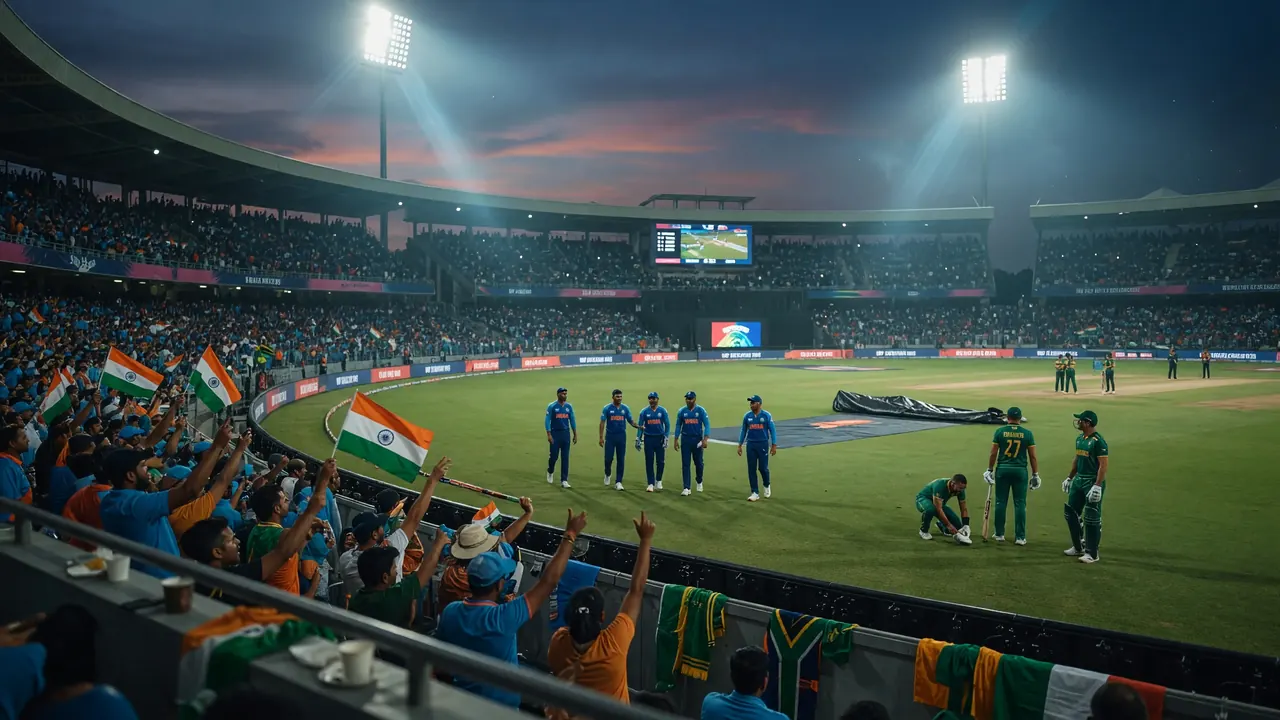
Match 43 of the Super 8 was not a warm-up for either side. India arrived at Narendra Modi Stadium with four consecutive wins in the tournament and twelve straight victories across T20 World Cups, a streak that had already forced South Africa into the role of disruptor rather than favourite. South Africa, finalists in the previous edition, brought a side built around left-hand power at the top and a pace unit that thrives when the new ball moves. Khel Now’s 22 February 2026 preview locked the fixture details, the predicted elevens, the head-to-head ledger and a pair of captaincy leans into a single morning briefing — and that dossier is the factual ceiling for the retrospective below.
My11Circle managers who locked teams for Super 8 nights know the shape of these contests: flat decks, dew after the dinner break, and a shortlist of multi-skill names who can win a fantasy league from either end. The Ahmedabad Super 8 meeting offered exactly that template. The retrospective does not invent a result line the preview never carried; it stays with the verified schedule, surface notes, predicted XIs and the captaincy choices the source circulated before the first ball.
Match facts at Narendra Modi Stadium
The fixture was listed as India versus South Africa, Match 43, Super 8, ICC T20 World Cup 2026. Kick-off was Sunday, 22 February 2026 at 7:00 PM IST, which translated to 1:30 PM GMT and 7:00 PM local time in Ahmedabad. Narendra Modi Stadium is the largest cricket venue in the world by capacity and has hosted high-scoring T20 nights across bilateral series and franchise cricket; the Super 8 stage simply put that square under World Cup lights with two sides who both prefer to bat deep and bowl with variety.
Khel Now described the Ahmedabad evening as clear and humid, around 29°C with humidity near 25 percent. That is not a rain-threat window. It is a dew window. On a flat Ahmedabad surface under clear skies, the second innings typically becomes the easier half of the night once moisture settles on the outfield and the ball starts to skid on. The preview’s surface note matched that pattern: a flat pitch with cited first-innings scores of 213, 187, 175 and 193, new-ball movement for the first few overs, grip for spinners once the shine faded, and dew that favoured bowling first. For fantasy managers, that combination is a classic “chase-friendly” Super 8 night — batters who face the second innings carry a slight boundary bonus, while first-innings bowlers who use the new ball well remain the cleanest bowling ceiling.
The 7:00 PM IST start also matters for Indian fantasy managers on a practical level. Contests lock around toss, and Super 8 XIs are often confirmed late. Managers who waited for the confirmed elevens on 22 February had a cleaner read than those who locked hours earlier on predicted lists alone. The Khel Now predicted XIs below were the best public template available that morning; they are not substitutes for the final team sheets, but they remain the verified shape of the fantasy argument the source published.
Head-to-head before Match 43
Across T20 internationals, India and South Africa had met 35 times heading into Match 43. India held 21 wins, South Africa 13, with one washout. That ledger is not a dead rubber statistic — it is a long-run reminder that India has usually found a way past South Africa in the shortest format, especially at home. Super 8, however, compresses history. A single bad powerplay or a missed yorker at the death can erase a twenty-one-to-thirteen edge in ninety minutes.
South Africa’s presence as previous-edition finalists also mattered more than the raw head-to-head. Finalists bring tournament memory: the ability to absorb a quiet first six overs and still finish a chase, the discipline to hold a total when dew arrives, and a bowling order that does not panic when the first ball of the night moves. India’s streak — four straight wins in the 2026 tournament and twelve consecutive T20 World Cup victories overall — put the hosts in the role of pursued side. Khel Now’s preview backed India to win while noting that South Africa could level the contest if they won the toss, a lean that matches the dew-first bowling preference the surface note already suggested.
Predicted India XI
Khel Now’s predicted India eleven, with Suryakumar Yadav as captain and Ishan Kishan keeping wicket, read: Ishan Kishan (wk), Abhishek Sharma, Tilak Varma, Hardik Pandya, Suryakumar Yadav (c), Shivam Dube, Rinku Singh, Axar Patel, Arshdeep Singh, Varun Chakaravarthy, Jasprit Bumrah. The side is built around left-hand power at the top, a deep finishing core from Pandya through Rinku, and a bowling unit that mixes new-ball pace, left-arm spin and mystery spin.
| Role | Player | Fantasy note from the preview shape |
|---|---|---|
| WK / opener | Ishan Kishan | Gloves plus powerplay ceiling |
| Opener | Abhishek Sharma | Left-hand power, early boundary threat |
| Top order | Tilak Varma | Anchor who can accelerate after the sixth over |
| All-rounder | Hardik Pandya | Middle-order batting plus death overs |
| Captain / middle | Suryakumar Yadav | Strike rotation and 360-degree scoring |
| Middle order | Shivam Dube | Left-hand power against pace |
| Finisher | Rinku Singh | Death batting, high ceiling in short bursts |
| All-rounder | Axar Patel | Left-arm spin, lower-order runs |
| Pace | Arshdeep Singh | New ball and death yorkers |
| Spin | Varun Chakaravarthy | Mystery spin through the middle |
| Pace | Jasprit Bumrah | New ball and death control |
For My11Circle managers, the India XI offered three clear multi-skill lanes. Hardik Pandya is the classic dual-category captain candidate: middle-order batting plus death bowling. Axar Patel is the quieter dual lane on a surface with spin grip. Abhishek Sharma and Ishan Kishan are the pure powerplay batting ceilings, while Bumrah and Arshdeep remain the bowling floors if India defend first. The depth from Suryakumar through Rinku also means India can absorb an early wicket without collapsing the fantasy points of the middle order — a useful property on a flat deck where one set batter can still finish the innings.
Managers who want a broader read on how Super 8 captaincy math usually plays out on Indian decks can explore Fantasy Cricket for related match briefs and captaincy frameworks from the same desk.
Predicted South Africa XI
The predicted South Africa eleven, with Aiden Markram as captain and Quinton de Kock keeping wicket, read: Quinton de Kock (wk), Aiden Markram (c), Ryan Rickelton, Tristan Stubbs, Dewald Brevis, Jason Smith, George Linde, Kagiso Rabada, Corbin Bosch, Anrich Nortje, Kwena Maphaka. The side leans on left-hand aggression at the top, a young middle-order core of Stubbs and Brevis, and a pace battery of Rabada, Nortje, Maphaka and Bosch, with Linde as the primary spin option.
| Role | Player | Fantasy note from the preview shape |
|---|---|---|
| WK / opener | Quinton de Kock | Gloves plus top-order ceiling |
| Captain / top | Aiden Markram | Anchor who can bowl part-time off-spin |
| Top order | Ryan Rickelton | Left-hand powerplay option |
| Middle order | Tristan Stubbs | High strike-rate finisher |
| Middle order | Dewald Brevis | Power-hitting ceiling |
| All-rounder | Jason Smith | Lower-order batting depth |
| Spin all-rounder | George Linde | Left-arm spin, lower-order runs |
| Pace | Kagiso Rabada | New-ball strike threat |
| Pace | Corbin Bosch | Seam support, lower-order bat |
| Pace | Anrich Nortje | Express pace through the middle |
| Pace | Kwena Maphaka | Left-arm pace variety |
South Africa’s fantasy shape differs from India’s in one important way: the bowling ceiling is concentrated in pure pace rather than split across spin and pace. Rabada and Nortje are the cleanest bowling captaincy alternatives if India bat first and the new ball moves, while de Kock is the batting ceiling if South Africa chase under lights. Markram’s dual role is real but thinner than Pandya’s — part-time off-spin on a flat Ahmedabad deck rarely matches death-over bowling for points. Brevis and Stubbs are the differential middle-order names for managers who wanted South Africa exposure without paying full freight for de Kock and Markram in the same eleven.
Pitch, weather and the fantasy lean
The surface package in the Khel Now preview is unusually clear for a morning fantasy note. First-innings scores of 213, 187, 175 and 193 establish a high-scoring baseline. New-ball movement keeps the first three or four overs honest. Spin grip through the middle overs rewards mystery and left-arm options. Dew after the dinner break tilts the night toward bowling first. Put together, those four notes produce a consistent fantasy hierarchy rather than a coin-flip.
First priority on that hierarchy is dual-category players who bat in the middle and bowl at the death or through the middle overs. Hardik Pandya sits at the top of that list on the India side; George Linde is the thinner South African equivalent. Second priority is top-order batters who face the powerplay in a chase, because dew makes boundary hitting cleaner in the second innings — de Kock, Abhishek Sharma and Ishan Kishan all fit that lane. Third priority is new-ball bowlers if the toss goes to the side bowling first: Bumrah, Arshdeep, Rabada and Nortje. Pure middle-order batters without bowling still score on a 190-plus deck, but they lose the second scoring path that separates Super 8 winners from mid-table fantasy sides.
Humidity near 25 percent with clear skies is not a collapse forecast. It is a moisture-on-the-outfield forecast. Managers who treated Ahmedabad like a green seamer would have over-weighted pure pacers and under-weighted finishers. Managers who treated it like a pure road would have ignored Bumrah’s new-ball overs entirely. The verified surface note sits between those two errors: enough movement to keep the new ball valuable, enough flatness to keep 180-plus totals normal, and enough dew to make the chase the preferred half of the night.
Captain and vice-captain options from the preview
Khel Now’s suggested Dream11 Team 1 captaincy options listed Hardik Pandya or Marco Jansen as captain, with Quinton de Kock or Shivam Dube as vice-captain. That shortlist is worth reading carefully against the predicted elevens. Pandya appears in India’s predicted side and is the cleanest dual-category pick on the card. De Kock appears in South Africa’s predicted side and is the cleanest pure batting ceiling if the visitors chase. Dube appears in India’s middle order as a left-hand power option against pace, a useful vice-captain on a flat deck where one left-hander can dominate a right-arm pace battery. Marco Jansen is named in the captaincy shortlist even though he does not appear in the predicted South Africa eleven published in the same briefing — managers who followed that captaincy lean still needed a confirmed team sheet before locking him, because a captain who does not start is a wasted multiplier.
| Option | Role in the shortlist | Why the preview floated it |
|---|---|---|
| Hardik Pandya (C) | Primary captain lean | Middle-order batting plus death bowling on a high-scoring deck |
| Marco Jansen (C) | Alternate captain lean | Named in the C shortlist; confirm XI before locking |
| Quinton de Kock (VC) | Primary vice-captain lean | Top-order ceiling plus keeping points in a chase |
| Shivam Dube (VC) | Alternate vice-captain lean | Left-hand power against pace in India’s middle order |
A practical My11Circle build on that shortlist would start with Pandya as captain when India bat second or when his bowling overs are guaranteed at the death. De Kock as vice-captain pairs cleanly with that choice because the two players score in different phases and for different sides, which reduces correlated failure. Dube as vice-captain is the more India-heavy alternative for managers who already stacked South African bowling and wanted a second Indian batting multiplier. Jansen as captain only makes sense after the final South Africa eleven confirms his place and his over allocation; the retrospective keeps that caveat explicit rather than treating the captaincy shortlist as a guaranteed XI.
How a Super 8 eleven looked on paper
Without inventing a full public Dream11 card beyond the verified captaincy options, the structural build for Match 43 still follows from the predicted elevens and the surface note. One wicketkeeper from Kishan or de Kock. Three to four batters drawn from Abhishek, Tilak, Suryakumar, Dube, Rinku, Rickelton, Stubbs and Brevis. One or two all-rounders led by Pandya and Axar, with Linde as the South African spin alternative. Three to four bowlers led by Bumrah, Arshdeep, Varun, Rabada, Nortje and Maphaka. The salary tension on a night like this is almost always between stacking India’s finishing core and paying for South Africa’s pace unit. Managers who tried to own every headline name usually broke the credit cap; managers who picked one clear captaincy lane and filled value around it stayed solvent.
India’s predicted balance — keeper-opener, two more top-order batters, three middle-order hitters, one spin all-rounder, two pacers and one mystery spinner — is itself a fantasy template. It is deep enough that a single early wicket does not empty the points pool. South Africa’s predicted balance is thinner in spin and thicker in pace, which is why Rabada and Nortje become more important if India bat first and the new ball moves under the 7:00 PM lights. The toss lean in the preview — South Africa able to level the contest if they won the toss — is really a dew lean restated: bowl first, chase later, and let the second-innings batters do the fantasy work.
What the 22 February briefing still teaches
Khel Now’s Match 43 preview did not publish a final scoreline, and this retrospective does not invent one. The durable lesson sits in the structure of the briefing itself. Super 8 fantasy on a flat Ahmedabad night is decided by three verified inputs: a high first-innings baseline, a dew-driven preference for bowling first, and a short captaincy list anchored by multi-skill names. India’s streak and South Africa’s finalist pedigree set the narrative frame, but the points were always going to come from powerplay batters, death bowlers and the one or two all-rounders who touch both columns.
For managers building Super 8 or late-stage T20 World Cup sides on similar Indian decks, the Ahmedabad template remains practical. Weight dual-category captains when the surface is flat and the death overs matter. Keep a pure top-order vice-captain who benefits from the chase. Do not ignore new-ball bowlers simply because the square has produced 190-plus totals — movement in the first three overs still creates wicket bonuses. And treat any captaincy name that does not appear in the predicted eleven as provisional until the team sheet is out. That discipline, more than any single player lean, is what the 22 February 2026 briefing still offers My11Circle managers reading it months later.
Underlying source: Khel Now, “IND vs SA Dream11 Prediction, Dream11 Playing XI, Today Match 43, Super 8, ICC T20 World Cup 2026,” published 22 February 2026 at 07:03 IST. Verified facts used above: India vs South Africa, Match 43, Super 8, ICC T20 World Cup 2026, scheduled Sunday 22 February 2026 at 7:00 PM IST / 1:30 PM GMT / 7:00 PM local at Narendra Modi Stadium, Ahmedabad; India entered with four straight wins and twelve consecutive T20 World Cup victories against previous-edition finalist South Africa; T20 head-to-head 35 meetings — India 21, South Africa 13, one washout; Ahmedabad weather clear and humid, about 29°C with around 25% humidity; pitch described as flat with first-innings scores of 213, 187, 175 and 193, new-ball movement, spin grip and dew favouring bowling first; predicted India XI — Ishan Kishan (wk), Abhishek Sharma, Tilak Varma, Hardik Pandya, Suryakumar Yadav (c), Shivam Dube, Rinku Singh, Axar Patel, Arshdeep Singh, Varun Chakaravarthy, Jasprit Bumrah; predicted South Africa XI — Quinton de Kock (wk), Aiden Markram (c), Ryan Rickelton, Tristan Stubbs, Dewald Brevis, Jason Smith, George Linde, Kagiso Rabada, Corbin Bosch, Anrich Nortje, Kwena Maphaka; Dream11 Team 1 captaincy options included Hardik Pandya or Marco Jansen as captain and Quinton de Kock or Shivam Dube as vice-captain; preview backed hosts India while noting South Africa could level the contest if they won the toss. Retrospective editorial mode; match result is outside the verified dossier.