
India vs Pakistan at the 2026 Asian Games: Only the Final Can Bring Them Together in Aichi-Nagoya
The Asian Games cricket draw released on 24 July 2026 has placed India and Pakistan in opposite halves of both the men's and women's T20 brackets in Aichi-Nagoya. If both nations clear their sides, the only place they can meet is the gold medal match, with cricket running from 19 September to 4 October 2026.
· My11Circle News Desk · Filed under Cricket News
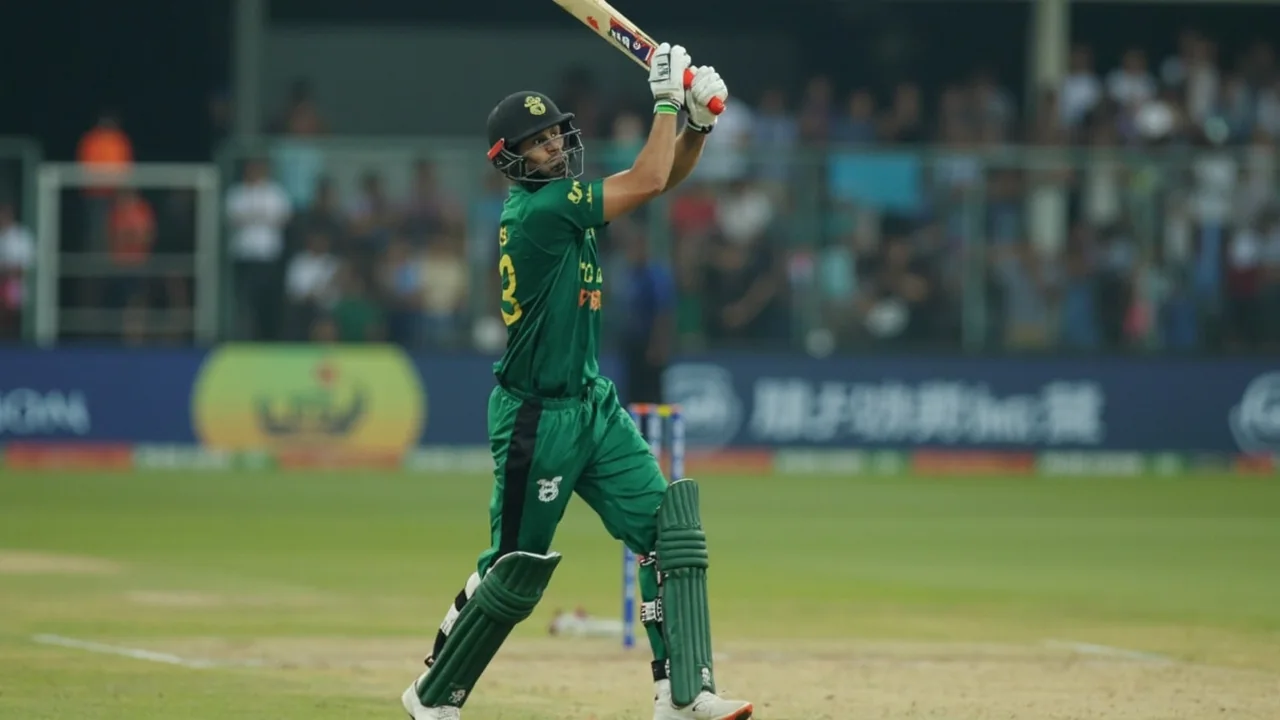
The Asian Games cricket draw, confirmed on Thursday 24 July 2026, has produced the bracket the broadcasters wanted and the coaches quietly hoped to avoid. India and Pakistan have been seeded into opposite halves of both the men's and women's T20 competitions. Run separately but on the same schedule, those tournaments leave a single point of contact between the two nations: a gold medal match. Anywhere earlier in the bracket, the geography of the draw rules them out.
Three things make this draw worth a second look. First, both tournaments are genuinely loaded: the men's event features ten teams and the women's event eight. Second, four of the strongest Asian sides — India, Pakistan, Sri Lanka and Bangladesh — have qualified directly for the men's quarter-finals, which means the headline act cannot happen until the final weekend of the tournament. Third, India defends both crowns. The men won gold at Hangzhou 2023 in a rain-affected final against Afghanistan settled on superior seeding, with Ruturaj Gaikwad leading the side. The women claimed the inaugural women's gold at Hangzhou by beating Sri Lanka in the final, defending 116 with Titas Sadhu taking 3 for 6 from her four overs. None of that history changes the new fact: from 19 September onward in Aichi-Nagoya, India and Pakistan will be on a collision course that only the final can complete.
What the draw actually looks like
The men's event is the larger of the two competitions and the one where the seeding is most consequential. India, Pakistan, Sri Lanka and Bangladesh have all qualified directly for the men's quarter-finals as the four highest-ranked Asian sides in the men's T20I rankings. That head start is significant: each of those four teams skips the preliminary group phase entirely and enters the knockouts with two fewer fixtures already on their body.
The remaining six teams contest the four remaining quarter-final places in two preliminary groups. Group A brings together Afghanistan, Hong Kong, China and Singapore; Group B has the UAE, Japan and Malaysia. The top two from each preliminary group advance to join the seeded four in the last eight. The Indian Express reporting that framed the bracket notes that the women's event follows a similar shape, but with only eight teams the women's quarter-finals are fully mapped from the start.
The practical effect of that structure is that India and Pakistan can only meet in the men's final. Each is in a separate half of a ten-team draw, with the four seeded sides placed to produce a headline final rather than an early blockbuster. The women's draw follows the same principle at a smaller scale: a clean India-Pakistan final is the maximum-stakes outcome both formats have been built to deliver.
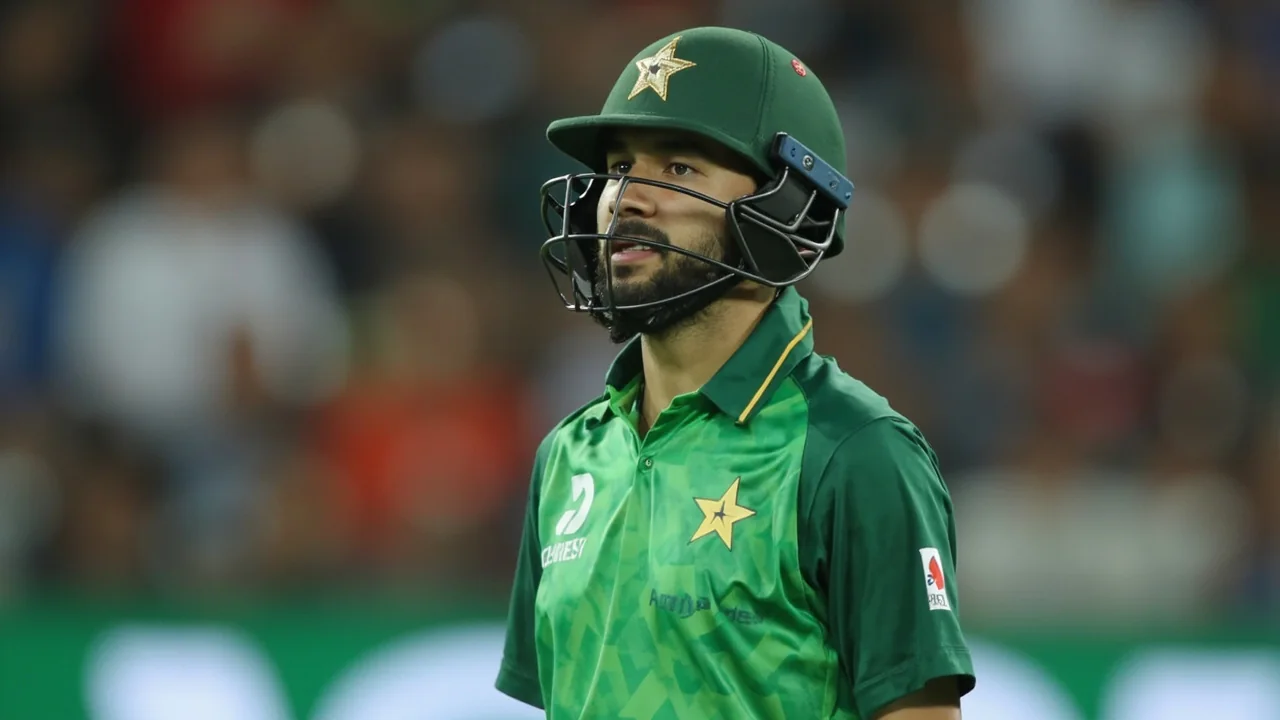
What the men's half of the draw really means
The format rewards the seeded four with control over their own early knockouts. India enters the quarter-final stage fresh and faces one of the four teams that have come through the preliminaries — Afghanistan, Hong Kong, China or Singapore in the upper half, or the UAE, Japan or Malaysia in the lower half. Pakistan is on the opposite side of that coin, working from the other half of the bracket. The seeded teams are not paired against each other in the quarter-finals because the seeding is the seeding: the only way for any two of the four to meet before the final is if both fall into the same half of the knockout, which the bracket does not allow.
For India specifically, the seeded path means a likely quarter-final against one of the lower-ranked qualifiers, a semi-final against a familiar Asian side, and then a final against whoever emerges from the opposite half. That is the same shape of tournament any seeded team plays, but it sets the ceiling for fantasy interest: the deeper India go, the more matches the squad plays, and the more the captain and vice-captain picks matter. The fantasy relevance of the draw is therefore inseparable from how many matches each team is guaranteed. The four seeded sides are guaranteed three matches minimum from the quarter-final onward. The six preliminary-round sides are guaranteed two, with a chance of three if they advance from the groups.
The women's picture, in a smaller window
The women's tournament is shorter, with only eight teams, and the bracket is fully mapped from the quarter-finals onward. India opens its title defence against hosts Japan, an early assignment against the most familiar opposition in the women's pool and a side that will have home advantage at a venue inside the Aichi-Nagoya cluster. The other half of the women's draw carries the remaining six teams, with Pakistan in the opposite half and Sri Lanka, Bangladesh and other qualifiers filling out the knockout slots.
For fantasy players on My11Circle, the women's tournament is a tighter event to model. With fewer matches per team, captain picks carry more weight per fixture, and the match-up on the opening day — India versus Japan in front of a home crowd — frames the entire run. A loss in that opening fixture does not eliminate India but does narrow the route to gold, which is exactly the kind of high-stakes opening fixture that benefits from the kind of fantasy preview coverage My11Circle runs in its My11Circle fantasy cricket news and match analysis section throughout the season.
Why the Aichi-Nagoya venue matters
The Asian Games cricket competition will be played in Aichi-Nagoya between 19 September and 4 October 2026, a window that places the tournament at the back end of the Asian summer and ahead of the winter Test calendar in India, Sri Lanka, Pakistan and Bangladesh. The Japanese host federation has positioned the cricket fixtures within the broader Aichi-Nagoya multisport cluster, with the men's and women's events running on adjacent match days so that broadcast coverage can move across both fixtures without relocation.
For India and Pakistan, the venue introduces two specific conditions that fantasy players should weigh before locking teams. First, the surface at Aichi-Nagoya in late September is a different read from the surfaces in the subcontinent in the same calendar slot. Daytime temperatures drop quickly through the second half of September, dew becomes a factor in the second innings, and the pitches are typically less abrasive than what Indian domestic T20 cricket serves up. Second, travel and acclimatisation affect the lower-ranked sides more than the top four. Hong Kong, China and Singapore arrive in Japan with shorter cricket tours than India, Pakistan, Sri Lanka and Bangladesh, which gives the seeded four another edge that goes beyond the ranking points used to seed them in the first place.

The Hangzhou template, and what it tells us about Aichi-Nagoya
Hangzhou 2023 is the most recent data point for Asian Games cricket, and it offers a usable template for what Aichi-Nagoya 2026 will demand. The men's final between India and Afghanistan was rain-affected and resolved on the Duckworth-Lewis-Stern method, with India declared winners on superior seeding after the rain rules left the par score unreachable for Afghanistan. That ending told the teams two things. First, the result can turn on weather as much as cricket, and the squad that handles interruption best is the one with the most even spread of contributors across the batting order. Second, the final is decided by a single session, not a series, which means captaincy decisions in the field — bowling rotations, batting order, impact-player selection — are amplified rather than diluted.
The women's final at Hangzhou was the more conventional of the two: India defending 116 against Sri Lanka, with Titas Sadhu's 3 for 6 the headline spell. The Titas Sadhu performance is a useful reference for fantasy modelling: a frontline bowler who finishes with three wickets in a low-scoring final is exactly the kind of captain pick who moves a fantasy leaderboard, and the conditions that produced her spell at Hangzhou — a slightly tacky surface and a chasing side under pressure — are the same conditions Japan could serve up at Aichi-Nagoya in late September. The bowlers who thrive in those conditions are the ones to weight more heavily in fantasy picks.
Why cricket at the Asian Games has commercial weight
Cricket at the Asian Games has not always had the weight it now carries. The 2010 Guangzhou edition included the sport but pulled out of the next two Games and was reinstated only at Hangzhou 2023. The return, combined with the ICC's announcement that cricket will be on the Olympic programme at Los Angeles 2028, has given the Asian Games cricket competition a different commercial ceiling. A gold medal in Aichi-Nagoya is no longer a regional consolation prize; it is one of the last senior multi-sport gold medals on offer before the sport returns to the Olympic stage for the first time since 1900.
For India and Pakistan, that changes the calculus on selection, rest and risk. Squads that might have rotated their senior players through a tournament framed as a development event are now more likely to send their first-choice XIs, particularly into the knockout phase. That is the dynamic that makes the men's final — and the women's final on the same schedule — the most-watched cricket fixtures between the 2026 T20 World Cup and the Los Angeles Olympics. Broadcasters in both markets understand the value, and the seeding in the draw reflects the same commercial logic that placed India and Pakistan on opposite sides of the bracket in the first place.
What to watch between now and 19 September
The draw is the story for now; the squad announcements are the next milestone. Each of the four seeded men's sides will name a squad in the weeks leading into the tournament, and the preliminary-group sides will follow shortly after. The fantasy-relevant decisions sit in those squad lists: which all-rounders travel, which fast bowlers are rested ahead of the home summer, and which young players are pushed into the XI to test combinations against Asian opposition that does not play the same style as the Test sides they will face through the rest of 2026.
Three dates are worth keeping on the calendar. The squad announcement windows for India, Pakistan and Sri Lanka are typically finalised in the last week of August. The official Asian Games cricket match schedule, with confirmed timings and broadcast slots, follows in the first week of September. The opening day of the cricket competition is 19 September 2026 in Aichi-Nagoya, with the men's final on or around 4 October and the women's final on the closing weekend of the same window. A confirmed India-Pakistan final in either draw will dominate the broadcast and the fantasy conversation in the same way the headline contests of the T20 World Cup have done all year.
Underlying source: Yahoo Sports (via The Cricket News syndication), "Only way India and Pakistan can meet at 2026 Asian Games cricket: Potential route to final, gold medal match in Aichi-Nagoya," published 24 July 2026 at 11:30:24 UTC, by Deepanjan Mitra. The article confirms the seeded separation of India and Pakistan in both the men's and women's T20 draws, the 19 September to 4 October 2026 window in Aichi-Nagoya, the 10-team men's field and 8-team women's field, the direct qualification of India, Pakistan, Sri Lanka and Bangladesh for the men's quarter-finals, the Group A and Group B preliminary composition, India's defence of both crowns, the Hangzhou 2023 men's final against Afghanistan and women's final against Sri Lanka, and the Los Angeles 2028 Olympic context.