
Why India Shouldn't Rush Vaibhav Sooryavanshi Into the ODI Side Yet
On 27 July 2026, Cricket News published a column asking the BCCI and the India team management to slow down. The piece followed Vaibhav Sooryavanshi's leading 151-run tally in India's 3-0 T20I whitewash of Zimbabwe in Harare, and former cricket administrator Makarand Waingankar's public appeal to fast-track the 14-year-old into the 2027 ODI World Cup squad. The argument is not that Sooryavanshi lacks talent — he clearly does not — but that 14 months is long enough to find a more like-for-like reserve opener, and that the existing option in Yashasvi Jaiswal is already a stronger fit for the role behind Shubman Gill and Rohit Sharma.
· My11Circle News Desk · All cricket news
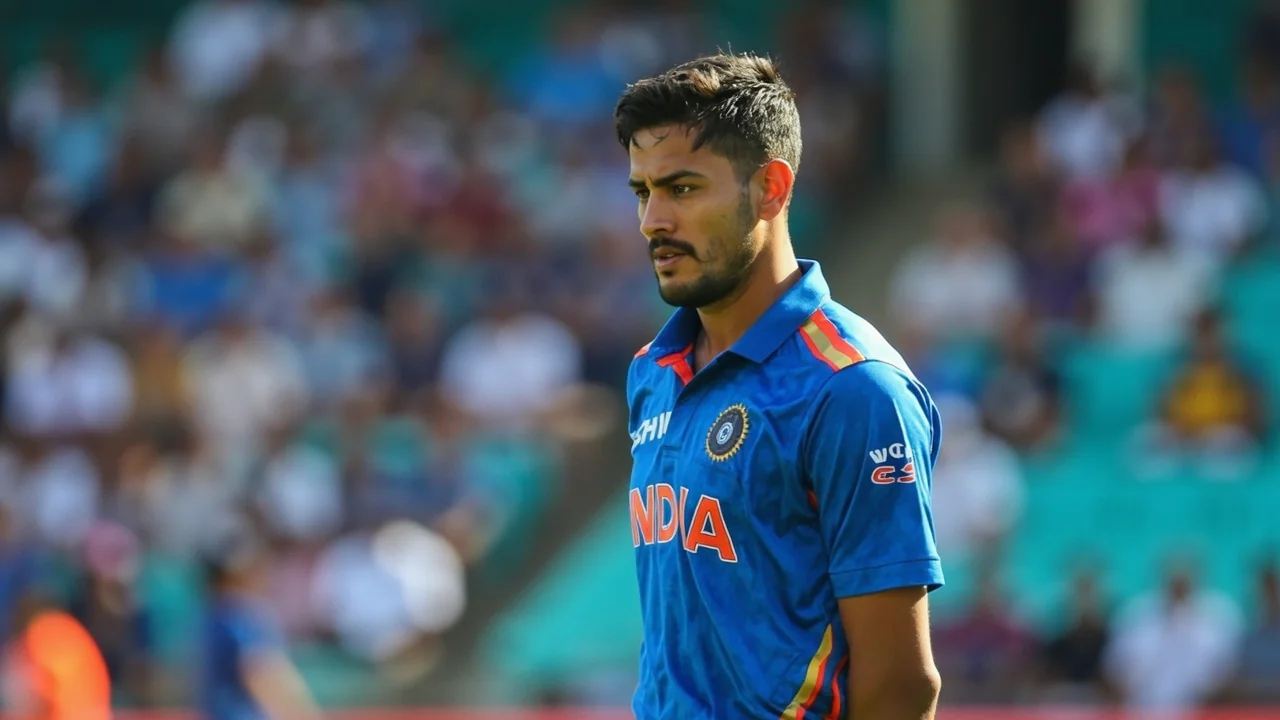
The Zimbabwe series was a tidy, low-scoring, and oddly instructive conclusion to India's 30-day stay in southern Africa. India won all three T20Is without losing a game, the bowling unit looked settled, and the tour-management decision to give Sooryavanshi three games at the top of the order produced exactly the kind of headline graphic that broadcasters love: a 14-year-old Indian opener finishing as the leading run-scorer of the series. It was, by the end of the third game, both true and beside the point. The 151 runs he scored against a weakened Zimbabwe attack in three matches do not settle the ODI debate. They underline how unsettled it still is.
Waingankar's column in Cricket News read like a fan letter written with a selector's pen. He compared Sooryavanshi's impact to Sanath Jayasuriya's at the 1996 World Cup, pointed out that the selectors had 14 months to build the bench for the 2027 ODI World Cup, and argued that those 14 months should include the teenager. The comparison is generous. Jayasuriya debuted in Tests at 22 and only became the destructive World Cup force at 26, after years of tier-one cricket. Sooryavanshi has seven T20 international caps. The gap between the two career curves is not a small one.
What Sooryavanshi actually did in Zimbabwe
The temptation, when a 14-year-old finishes a series as the leading run-scorer, is to read the runs as a verdict on his readiness. The runs are real and the innings were fluent, but the context cuts both ways. India's three T20Is in Harare were played against a Zimbabwe side that has lost the bulk of its senior batting core since the 2023 World Cup qualifying cycle, on surfaces that offered turn from the second innings onward, and with India rotating its full-strength bowling unit across the series. None of that is an excuse for the 151 runs — the innings still had to be played — but it does mean the runs came against a specific bowling attack under specific conditions. A 71-run knock against Blessing Muzarabani and Richard Ngarava in Harare is a different proposition from a 71-run knock against Josh Hazlewood and Mitchell Starc at the WACA in 2027.
Sooryavanshi played seven T20 internationals for India across the England and Zimbabwe tours at the time of the Cricket News column. He sat out the Ireland series, debuted against England, played four matches in that series without producing a major score, and then came into the Zimbabwe series with a clearer role at the top of the order. The 151-run series tally is the only completed picture so far. One small-window tour, against a depleted opposition, with a defined role, is the kind of evidence base that supports a wider argument but does not settle one. The honest reading is that Sooryavanshi looks ready for a fifth T20I bowler in the India XI, not yet for the ODI opener reserve slot.
The case Cricket News made, in five lines
The Cricket News argument is straightforward. It runs in five steps, and none of them are controversial when stated on their own.
- Sooryavanshi is a once-in-a-generation talent at his age, but age is not the same as readiness for 50-over cricket.
- The 2027 ODI World Cup is 14 months away, and India has two established openers already in the team in Shubman Gill and Rohit Sharma.
- Yashasvi Jaiswal is already the more established reserve ODI opener, with a first-class record that reads like a sheet of audited results.
- Sooryavanshi's path to the 2027 squad should run through Ranji Trophy and Duleep Trophy innings, not through T20I series finishes.
- Pairing the 1996 Jayasuriya comparison with a teenager who has seven caps is the kind of rhetoric that helps careers on social media and hurts them at the selection table.
Read those five lines in sequence and the conclusion is conservative. Not "do not pick Sooryavanshi". Not "send him home from the tour". Just "do not solve the ODI reserve opener problem by skipping the obvious candidate, and do not build a 14-year-old's career around a single T20I series against a depleted attack." That is a careful, defensible position, and it is the position Cricket News laid out.
What Jaiswal's ODI record actually shows
The most useful comparison in the column is the one the BCCI selectors will quietly agree with. Yashasvi Jaiswal's ODI record at the time of writing is six innings, 285 runs, a highest score of 116 not out, a batting average of 71.25, and two centuries. That is a sample size big enough to be useful and small enough to be improving. The 71.25 average is the number that will draw the most attention — it is the kind of average that does not survive contact with a fuller sample of bowlers, but it is also the kind of average that tells the selectors the player can build an ODI innings from the top of the order.
Jaiswal was picked for the ODIs against England in the same window, scored his second ODI century against a full-strength attack, and was the back-up opener on the bench during the Champions Trophy block. He is not a finished ODI player — neither is anyone with six innings — but he is the player who has actually done the job in the format the selectors are being asked to fill. Sooryavanshi has not played an ODI. The argument is that the seat next to Gill and Rohit Sharma should go to the player who has played the format, not the player who has played the format the format is closest to.
| Player | Age | ODI caps | ODI runs | ODI HS | ODI average | ODI centuries |
|---|---|---|---|---|---|---|
| Yashasvi Jaiswal | 24 | 6 | 285 | 116* | 71.25 | 2 |
| Vaibhav Sooryavanshi | 14 | 0 | — | — | — | — |
The table is unfair in the other direction too: Jaiswal is five years older and five years further into his career, and the underlying age gap is a clue rather than a handicap. But the format gap is the one that matters for the 2027 World Cup, and the format gap is the one the selectors will read first.
The selector's 14-month window, mapped out
Waingankar's framing — "14 months to strengthen the bench" — is the part of the column most worth pushing back on, not because the underlying number is wrong but because the calendar it implies is already crowded. India's 2027 ODI World Cup warm-up runs through a minimum of ten senior ODI series, two Asia Cups, and a Champions Trophy block. The domestic calendar adds a full Ranji season, a Duleep Trophy cycle, and the Irani Trophy. None of that is spare time. Sooryavanshi can play all of it. He should, in fact, play all of it. The argument is not that he should be excluded from the schedule; it is that he should be allowed to do the schedule before he is given the ODI cap.
The selector's better question is not "should Sooryavanshi be in the squad?" but "which ODI series in the next 14 months should he play, and against which attack?" The obvious answer is the August-September 2026 home series against Australia, which India has agreed to schedule as a transitional ODI block, and the early-2027 South Africa tour, which will give him his first experience of South African bounce and pace. Fewer than six ODIs in 14 months is enough to learn the format without burning the player's red-ball and white-ball development. Sooryavanshi's wider career needs the Ranji runs anyway — the 2027 World Cup is followed by a 2027-28 home Test season that India will want him ready for.
Where Waingankar's comparison does not hold
The Jayasuriya reference is the rhetorical spike in the column, and it deserves a closer look. Sanath Jayasuriya was a Sri Lanka all-rounder who debuted in ODIs in 1989 at the age of 19, played 14 Tests and 445 ODIs, and only became the destructive World Cup force at the 1996 World Cup at the age of 26. The shape of the comparison is wrong on both ends. Sooryavanshi is five years younger at his debut-equivalent stage, and the formats that built Jayasuriya's 1996 innings — provincial first-class cricket and three years of ODI cricket in the mid-1990s — are not the formats Sooryavanshi has been playing.
The more useful comparison is internal. The last Indian teenage opener to debut was, in the modern era, hardly anyone. The last Indian opener to come into the ODI side under 20 was Sachin Tendulkar in 1989, and Tendulkar's path ran through first-class cricket at Mumbai and a year of India A cricket before his ODI debut. Sooryavanshi has had the IPL. He has not had the equivalent of Tendulkar's year of India A cricket on seaming tracks. The Ranji Trophy is the missing middle of his development, and it is the middle that the selectors should be filling before they hand him the ODI cap.
What the 151 runs at Harare actually change
The 151 runs do change something. They change the conversation in the dressing room, the perception in the stands, and the commercial value of the player. They do not change the underlying selection picture. The selectors will know that the series was against a specific attack on specific pitches. They will know that the player who has the strongest ODI case is Jaiswal, who has played the format. They will know that 14 months is enough time to build a bigger audition without burning the player's development. The 151 runs at Harare are a signal, not a verdict. They tell the selectors that the player is ready for more T20I caps, more IPL matches, and more Ranji and Duleep innings. They do not tell the selectors that the player is ready for the ODI opener reserve slot.
There is a useful parallel in India's recent white-ball history. Yashasvi Jaiswal's ODI career was built on a similar logic. He played T20Is first, then IPL, then a long Ranji Trophy run, then came into the ODI side with a full season of senior cricket behind him. The selectors did not rush him. They waited for the format gap to shrink, and the format gap shrank because he played the format, not because he played something close to it. Sooryavanshi's path is the same. The faster that path is forced, the more it will cost the player down the line.
What to watch in the next 14 months
The practical reading for My11Circle managers is that Sooryavanshi is almost certainly not in the India ODI squad for the immediate fixtures. The August 2026 home ODIs against Australia will go ahead with Jaiswal as the reserve opener, and the September 2026 Asia Cup block will follow the same pattern. The window where the call-up becomes live is the early-2027 South Africa ODIs. If Sooryavanshi plays a Ranji season with a sub-30 average and a Duleep Trophy with a defined innings against red-ball bowling, the selectors will have the evidence. If he does not, they will not.
For fantasy lineups, the practical read is that Jaiswal is the ODI player to back, and that Sooryavanshi remains a T20-only option until the format picture changes. The wider My11Circle cricket news desk tracks the full selection story as it develops, from the August ODIs through to the squad announcement for the 2027 World Cup. The next data point is the squad for the home Australia ODIs, expected in mid-August.
Underlying source: Cricket News, "Fast-tracking Vaibhav Sooryavanshi to ODI team is not required: Reasons why hype around India wonderkid must reduce despite success vs Zimbabwe listed," published 27 July 2026 at 10:48 UTC, drawing on Makarand Waingankar's public comments, the BCCI's squad release for the India tour of Zimbabwe, and the international bowling figures for the India-England and India-Zimbabwe T20I series. Verified facts: Sooryavanshi led the T20I series against Zimbabwe with 151 runs as India completed a 3-0 whitewash; at the time of publication he had played seven T20 internationals across the England and Zimbabwe tours; he sat out the Ireland series, debuted against England, and played four matches in that series without producing a major score; Yashasvi Jaiswal's ODI record at the time of writing was six innings, 285 runs, a highest score of 116 not out, an average of 71.25, and two centuries; the column argued that Sooryavanshi needed more Ranji Trophy and Duleep Trophy experience before being fast-tracked into ODI cricket.